
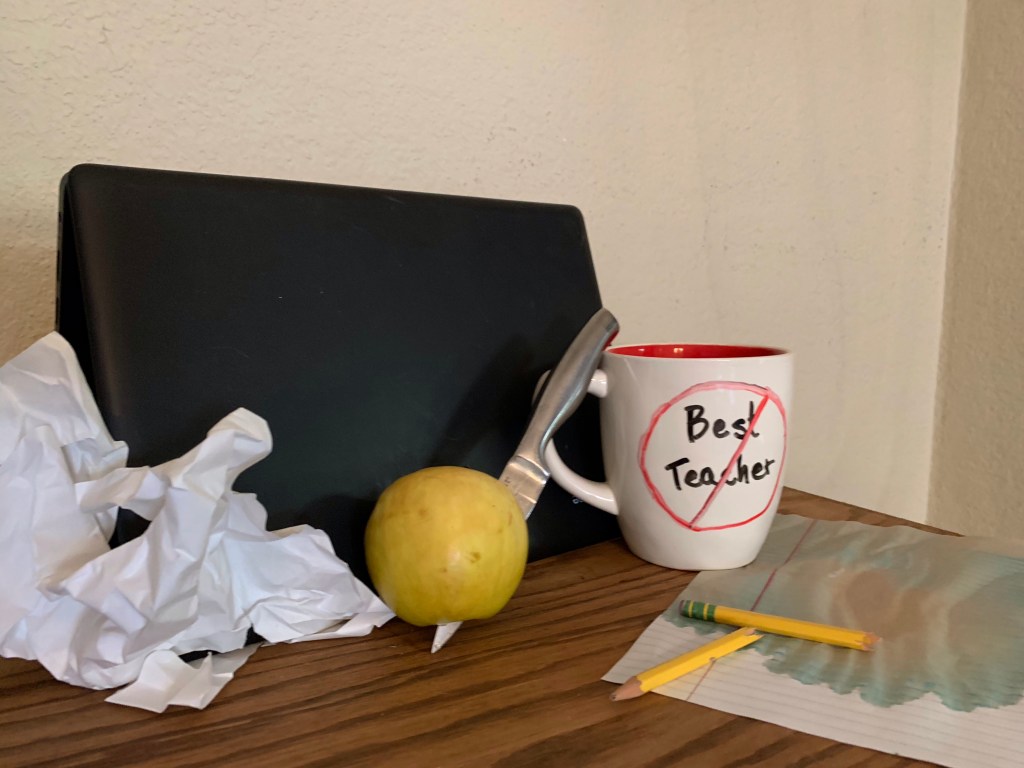
One thing I love as a substitute teacher is being in a pre-kindergarten classroom one day, and a 12th grade classroom the next. Walking into a new classroom early in the morning is exciting, and a little frantic. I first wander around the room, trying to take in the walls to get a feeling for the classroom routines and strategies. Then the search begins. Where are the lesson plans? The worksheets? The math books? What do all these acronyms stand for?
I often have to take a breath and remind myself in those first morning minutes there are only two rules substitutes need to remember:
You can only do what you can do.
No one expects anything more than that from you.
Teachers are highly-trained experts with advanced degrees and constant continuing education requirements. They spend years developing lesson plans and collaborating with their peers. No one untrained can walk in and do what they do. It’s like expecting to be an engineer for a day. However, whatever your degree, when you are the sub, you are the teacher. You bring something new and different to the classroom, not something less. Remember, you are valuable, intelligent, and necessary. And a little crazy, to put yourself in a room with small people with big expectations.
So how do you get through this? Here are my top ten sub tips for grades K-8:
Ask your kids if they’ve done something before. Teachers rarely expect me to introduce totally new material. Usually, the kids have done something similar before, and many can get through with minimal assistance. I always start by asking if they know what to do, and if most say ‘yes’, I tell them to go ahead and start, and have everyone else come to me so I can work with a more manageable group. Remember, in elementary school, it’s actually okay if they don’t finish if they’ve really tried. It’s good for the teacher to know what students are still grappling with.
Ask questions. Kids learn by teaching. Ask them to explain things to you. You will both find where the gaps are when they explain what they know.
Nothing takes five minutes. I always have fast finishers show me their work. Without exception, there is something they skipped, or something they could do better. Make sure to have your kids take their time and do their best work.
Don’t expect perfect work. The work done in the classroom is never perfect. If students work with focus on something for 20-30 minutes (10-15 minutes for Pre K and K,) that’s all they need to do. If it’s unfinished, you can come back after a break.
Don’t do their work for them. I always tell kids, “Your teacher needs to know what you don’t know.” It’s better for them to not do the work than for you to finish it for them.
Take breaks. I know when recess is coming without looking at the clock. Blood sugar starts dropping and kids can’t sit still. You must take breaks at every age. Jump up and down or play a quick game. Education is a marathon, not a sprint.
Only use devices for educational websites. Don’t start down the road of ‘taking a break’ on computers or iPads. Reeling kids back in when they’ve gone that direction is close to impossible. Ask a teacher for suggestions for learning websites. There are plenty that are free, fun, and very useful.
Read. To them, with them, and to themselves. This is the very most important skill they need, and it’s where they can fall behind, or get ahead.
Communicate with other teachers. In the morning before school starts, I quickly introduce myself to teachers next door, and let them know I’m the sub for the day. Without fail, other teachers help me out. Communicate—use them—they are your lifeline.
Lastly, the only thing you must try to do as well as the classroom teacher is the hardest thing of all. HAVE PATIENCE. Take a break. Walk away. Have them get out a book and read or get out the crayons and color while you do something else. The only kinds of thing you should say to students is, “Let’s take a break and get a drink of water,” “Let’s look at that again,” “Let’s move on,” “Good job,” “Okay let’s come back to that,” “Wow, that’s excellent,” or, “I had no idea you could do that.” It doesn’t have to be overflowing praise heaped on them (although that is wonderful if you feel you can do it sincerely.) But it’s part of the job to encourage students to continue learning.
Now take a breath, and forgive yourself for not being better at this. We’re all in the same boat, and we’ll all face the same challenges ahead as we get to them. For now, do what you can do. No one expects more.
 recoreink.